Minneapolis, MN | June 11, 2026
FOR IMMEDIATE RELEASE
Youth as Solutions™ participants reached more than 276,000 community members through transportation and mobility safety initiatives supported by General Motors
Saint Paul, MN — June 11, 2026 — During the 2025–2026 school year, young people across the United States engaged in identifying issues they care about, working to better understand the impacts in their communities, planning for positive changes, and taking action through the National Youth Leadership Council’s (NYLC) Youth as Solutions™ program, supported by General Motors.
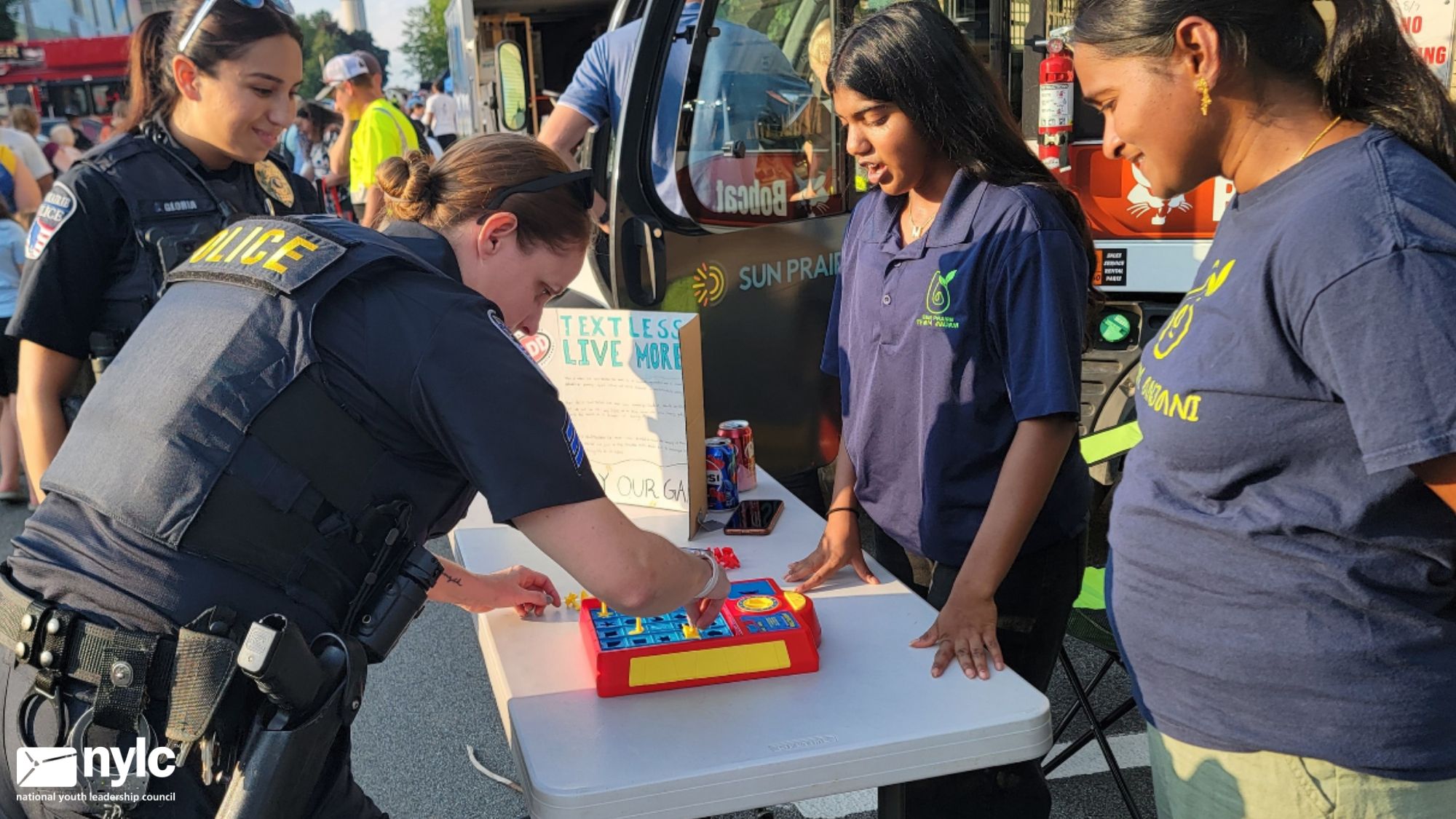
Twenty-four youth-led teams representing 17 states explored the question: What does it mean for transportation and mobility to be safer in my community?
The answer came in the form of an extraordinary mobilization of youth leaders. A cohort of 1,093 youth participants, guided by 127 youth leaders, stepped up to better understand community challenges related to transportation safety. Supported by 81 adult mentors, these intergenerational teams were able to reach and impact 276,833 community members through their projects.
These 24 youth-led grassroots teams focused on a wide range of transportation safety issues, including seatbelt use, distracted and impaired driving, bicycle and pedestrian safety, speeding, roadside hazards, driver education, and safety around emergency responders. Youth researchers also identified emerging concerns unique to their communities, such as rising e-bike and e-scooter usage.
By October of 2025, the City of Las Vegas alone experienced 142 local students being struck by vehicles less than three months into the school year. Through their inquiry and research, the City of Las Vegas Youth Advisory Council was mobilized to respond to the issue and worked with their city to raise awareness around new e-bike and e-scooter laws that were recently passed.
Across the country, teams localized their approach to solve unique transit and mobility concerns in their respective regions:
- Legislative Advocacy: The Driven2BSafe2 team (Missouri) hosted 10 community events reaching 1,045 people and actively advocated for Missouri House Bill 2195, which aims to establish drivers education as a free elective for the 2027–2028 school year.
- Innovative Mobile Campaigns: DJ Center for Youth (Indiana) designed safe driving bumper magnets for 31 commercial dump trucks. Traveling over 51,121 miles in 15 days, these safety messages expanded daily visibility to an estimated 350,000 to 500,000 drivers.
- Institutional Education: Gillespie High School MPACT’D (Illinois) created K–8 traffic safety curricula launching in Fall 2026, presenting their work to 120 educators and conducting an official interview with Illinois Secretary of State Alexius Ginnoulias.
- Community Trust Building: The Little Legacies Community Service Organization (Missouri) organized a Safe Driving and Police Interaction Day, bringing together Black youth and local law enforcement to build mutual trust and positive community allyship.
- Hazardous Weather Response: Facing perilous winter weather conditions on local mountain passes, the Southwest Montana Youth Partners (Montana) hosted a health and safety fair that equipped 100 students with emergency winter car kits.
The success of the 2025–2026 Youth as Solutions™ program was made possible through the partnership and support of General Motors. Together, NYLC, General Motors, adult mentors, and youth leaders demonstrated the powerful outcomes that emerge when young people are equipped with meaningful leadership opportunities, resources, and support. Through grassroots action, public education, and policy advocacy, participating teams advanced transportation safety efforts while developing the skills and confidence needed to create lasting community change.
About the National Youth Leadership Council
The National Youth Leadership Council (NYLC) is the nation’s leading organization in service-learning. Founded in 1983 and headquartered in Saint Paul, Minnesota, NYLC equips young people with the knowledge, skills, and confidence to amplify youth voice and co-create a more just, sustainable, and peaceful world. NYLC advances service-learning, youth voice, and leadership through training, research, standards, and the annual National Service-Learning Conference. Learn more at nylc.org.
Media Contact
Syed Murtaza-Rose, Program Director, Youth as Solutions | [email protected]
National Youth Leadership Council | nylc.org
###